
Restaurant Fire Suppression Services in St. Louis, MO
Get help with commercial kitchen hood fire suppression: semiannual inspections, recharges after a discharge, deficiency fixes after a failed fire inspection, and new or upgraded systems. Send one request and we'll connect you with an independent provider that serves your area.
- Restaurants, bars, hotels, schools, hospitals, and food trucks
- ANSUL, Pyro-Chem, Amerex, Kidde, Buckeye, and other wet chemical systems
- St. Louis City, St. Louis County, St. Charles County, and Metro East, Illinois
What Do You Need for Your Kitchen?
Pick the request that matches your situation. Each page explains what the work involves, what codes say, and what to ask the provider.
Kitchen Fire Suppression Inspection
The required semiannual service: links, nozzles, detection, pull station, fuel shutoff, tag, and report.
Hood System Repair & Recharge
The system discharged, won't reset, or a component failed. You can't cook under that hood until it's restored.
Failed Fire Inspection Fixes
A fire inspector wrote up your hood system. Get the deficiencies corrected and documented before your deadline.
New Systems & UL 300 Upgrades
New restaurants, remodels, swapped appliances, and pre-UL 300 systems that need to be replaced.
ANSUL System Service
Inspection, recharge, and repair requests for ANSUL R-102 and Piranha systems, and the other major brands.
Food Truck Fire Suppression
Systems for food trucks and trailers, and what mobile kitchens need before their fire safety inspection.
Failed a Fire Inspection or Got a Deficiency Notice?
An expired service tag, missing nozzle caps, an appliance moved out from under its nozzle, or no Class K extinguisher are common write-ups. Most can be corrected quickly once the right technician is scheduled. Say you have a deadline in your request.
What a Kitchen Hood Suppression System Does
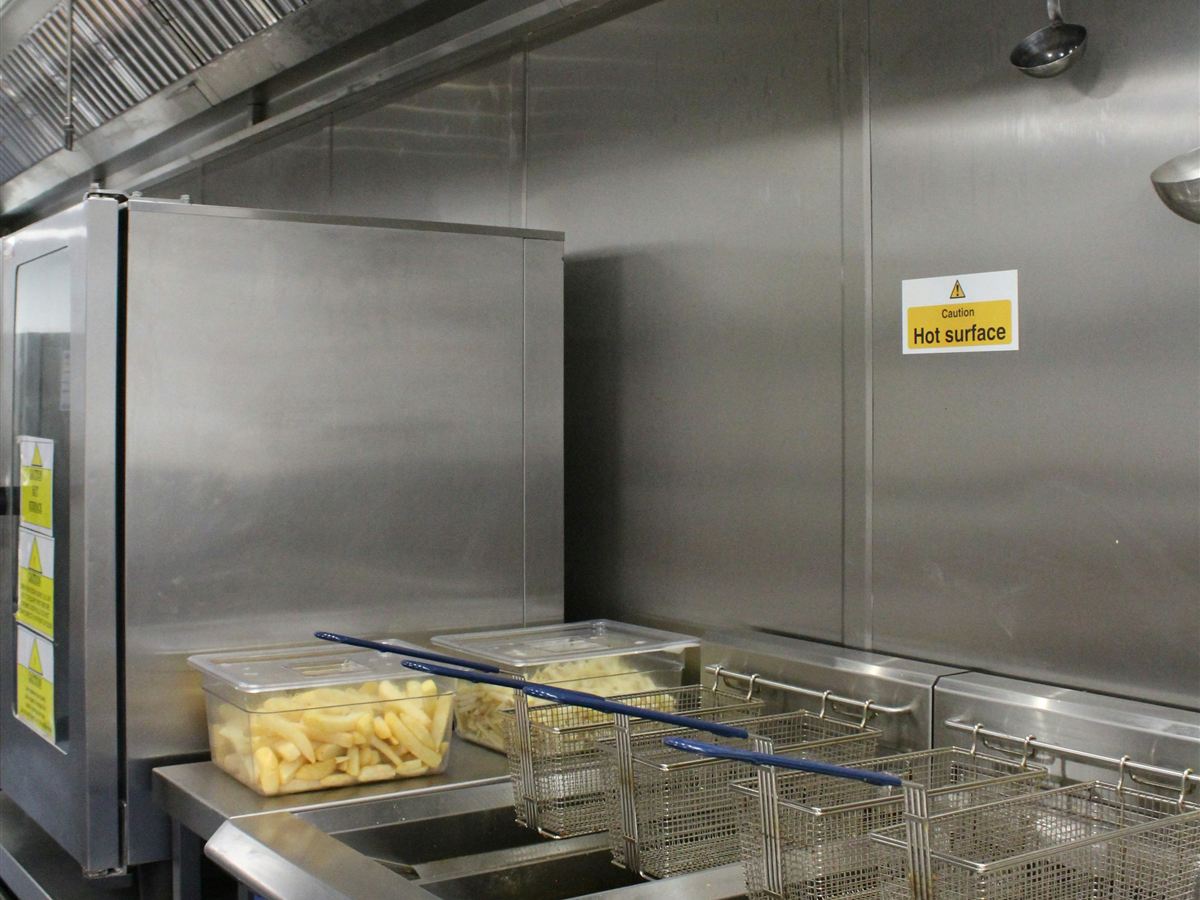
A restaurant hood suppression system is a pre-engineered wet chemical system mounted in and above your exhaust hood. Nozzles are aimed at each cooking appliance, into the plenum, and up the duct. When heat melts a fusible link over the cooking line, or someone pulls the manual station, the system releases a liquid agent that knocks down the flames and reacts with hot cooking oil to form a soapy layer that helps keep it from reigniting. At the same moment it shuts off fuel or electric power to the appliances under the hood.
Because the system protects the most fire-prone part of the building, the fire code requires it to be serviced at least every six months and after every discharge, by qualified, trained technicians. It also has to match the appliances beneath it. Moving a fryer, adding a charbroiler, or switching cooking oil can mean the nozzles no longer cover the hazard.
- Required over appliances that produce grease-laden vapors
- Serviced every six months, plus after any discharge
- Must be redesigned when the cooking line changes
One Request. A Provider Who Serves Your Area.
Here's what happens after you reach out.
Tell Us What You Need
Your kitchen, ZIP code, system brand if you know it, and any inspection deadline.
We Review It
We make sure the request has what a provider needs, like urgency and the equipment involved.
We Pass It Along
With your consent, your request goes to an independent fire protection provider serving your location.
The Provider Schedules
The provider contacts you, quotes the work, does it, and gives you the service report and tag.
Kitchen Suppression Requests Across Greater St. Louis
Fire code enforcement is local. Who inspects your kitchen, and which code edition they use, depends on where it is. Each area page covers the details.
St. Louis City
Downtown, Soulard, The Hill, the Central West End, The Grove, and food trucks registered with the City.
St. Louis County
Dozens of fire departments and districts, from Clayton and Kirkwood to Chesterfield and Florissant.
St. Charles County
St. Charles, O'Fallon, St. Peters, Wentzville, and Lake St. Louis, Missouri.
Metro East, Illinois
Belleville, Edwardsville, O'Fallon, Collinsville, and Fairview Heights, under Illinois rules.
Guides for Restaurant Owners
Plain-English answers to the questions owners and kitchen managers ask most.
What Fire Suppression Service Costs
What drives the price of inspections, recharges, and new systems.
Restaurant Fire Suppression Questions
What is a kitchen hood fire suppression system?
It's a pre-engineered wet chemical fire extinguishing system installed in a commercial kitchen exhaust hood. Nozzles cover the cooking appliances, hood plenum, and duct, and the system releases automatically through fusible links or manually through a pull station, while shutting off fuel or power to the appliances.
Is a hood fire suppression system required in my restaurant?
Commercial cooking appliances that produce grease-laden vapors generally require a hood with an approved fire extinguishing system under the fire code your jurisdiction has adopted. Your local fire department or fire protection district decides what applies to your kitchen.
How often does a restaurant suppression system need to be inspected?
At least every six months by a qualified technician, and after any discharge. Owners should also do simple monthly visual checks. The kitchen fire suppression inspection page explains what each visit covers.
Are you a fire protection company?
No. STL Kitchen Suppression is an independent service-request and referral resource. With your consent, we pass your request to an independent fire protection provider that performs the work.
What areas do you take requests from?
St. Louis City, St. Louis County, and St. Charles County in Missouri, plus the Metro East in Illinois, including Belleville, Edwardsville, O'Fallon, and Collinsville.
My system went off. What should I do first?
Don't cook under that hood until a qualified technician has recharged and reset the system. Keep people away from the agent residue, and follow any direction from your fire department. Our guide on what to do after an Ansul system goes off walks through the first 24 hours.
Get Your Kitchen's Suppression System Handled
Inspection due, system discharged, or deficiency notice in hand? Send the details.